Flamingo Population of Lake Manyara Alkaline Shallows
Lesser flamingos are among the most visually spectacular birds in Africa, and Lake Manyara is one of the most accessible sites in East Africa to see them in significant numbers. The alkaline chemistry of Lake Manyara — rich in the soda and sodium compounds that support growth of the blue-green...
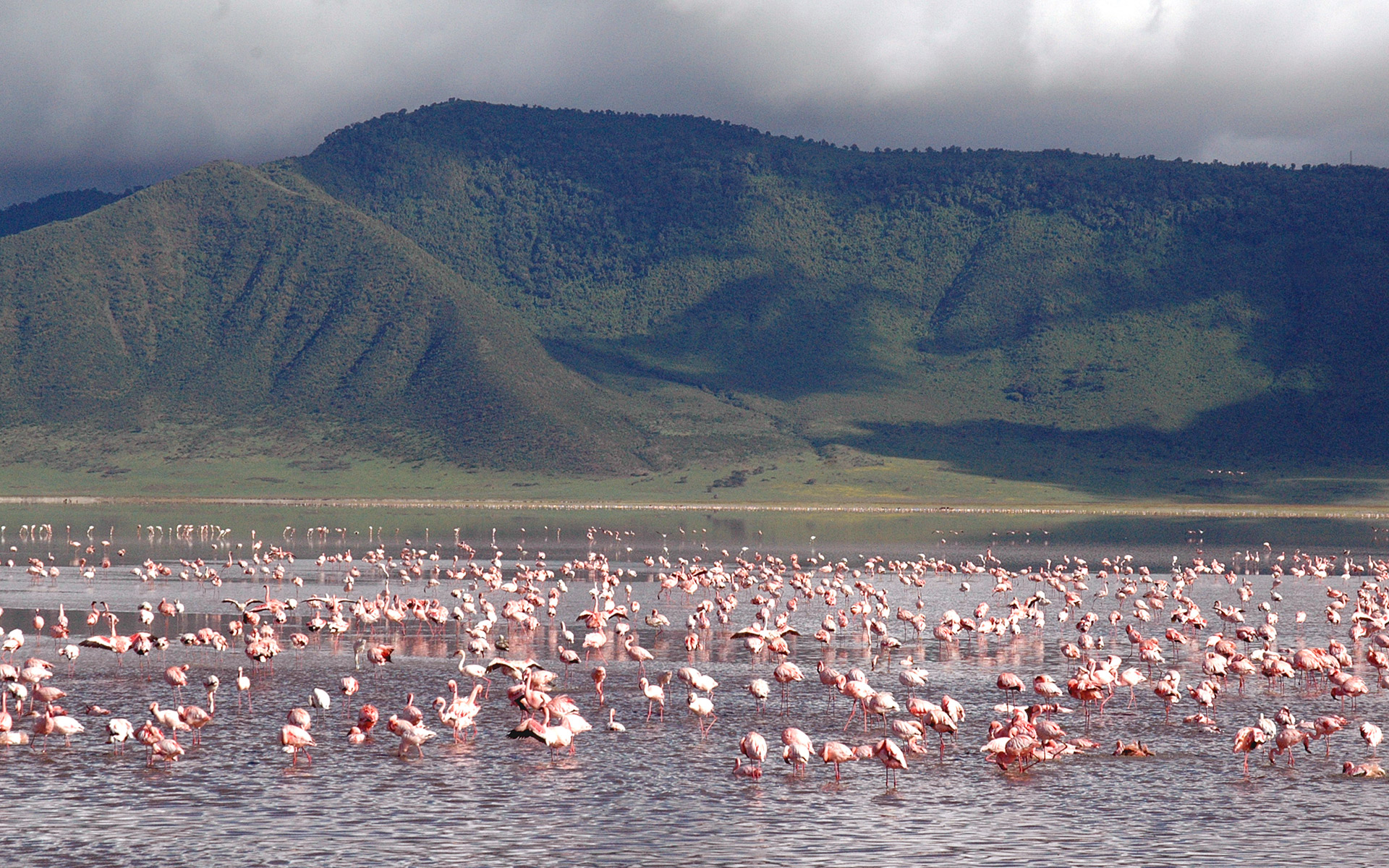
Lesser flamingos are among the most visually spectacular birds in Africa, and Lake Manyara is one of the most accessible sites in East Africa to see them in significant numbers. The alkaline chemistry of Lake Manyara — rich in the soda and sodium compounds that support growth of the blue-green algae Spirulina, the primary food source of the lesser flamingo — makes it an ideal flamingo habitat, and in the right season, tens of thousands of the birds gather in the shallows to feed, creating a spectacle that turns the entire lakeshore a shimmering, improbable pink.
Flamingos are technically mobile — they move between alkaline lakes across the Great Rift Valley system depending on water levels, food availability, and breeding conditions. In a good year, Lake Manyara hosts substantial flamingo concentrations from November through April, with the peak numbers typically occurring in January and February when the alkaline chemistry is optimal. In drought years or years when the lake level drops significantly, the birds may disperse to Natron (their primary East African breeding ground), Bogoria in Kenya, or the Ngorongoro Crater’s Lake Magadi.
The Feeding Spectacle
Flamingo feeding behaviour is itself a remarkable sight at close range. The birds feed by holding their heads upside-down in the shallows and pumping water through a specialised filter structure in their bill — a system so efficient that a single flamingo can filter several litres of algae-rich water per minute. This head-inverted feeding posture, combined with the constant movement of thousands of birds through shallow water that turns pink with their reflected colour, creates a visual texture unlike anything else in African wildlife. The sound is equally distinctive — a low, constant murmur of thousands of birds calling, punctuated by the splashing of groups taking flight and landing again across the lake surface.
The great white pelican is Lake Manyara’s other spectacular waterbird, often present in flocks of hundreds on the lake shore and in the deeper water. Pelicans hunt cooperatively — coordinated groups herd fish into shallow water and dip their enormous bills in synchronised scooping movements. Watching a cooperative pelican fishing drive from the lakeshore is an underappreciated Manyara spectacle that receives far less attention than the lions or the flamingos but rewards close observation with remarkable behavioural complexity.