Zanzibar Stone Town Cultural History UNESCO World Heritage Site
In 2000, UNESCO inscribed Stone Town of Zanzibar as a World Heritage Site, citing its “outstanding universal value” as a cultural, trading, and political centre of the East African coast for the past millennium. The inscription was recognition of what anyone who has spent more than an hour wandering the...
In 2000, UNESCO inscribed Stone Town of Zanzibar as a World Heritage Site, citing its “outstanding universal value” as a cultural, trading, and political centre of the East African coast for the past millennium. The inscription was recognition of what anyone who has spent more than an hour wandering the old town’s alleyways already intuitively understands: this is a place of extraordinary layered history, where Arab, Persian, Indian, African, and European cultures have met, traded, conflicted, and ultimately merged into a civilisation that is genuinely unlike anything else in the world. The UNESCO designation brought with it international attention, conservation funding, and a formal framework for protecting the built environment — though the pressures of tourism, urban growth, and deferred maintenance continue to threaten many of the old town’s most significant structures.
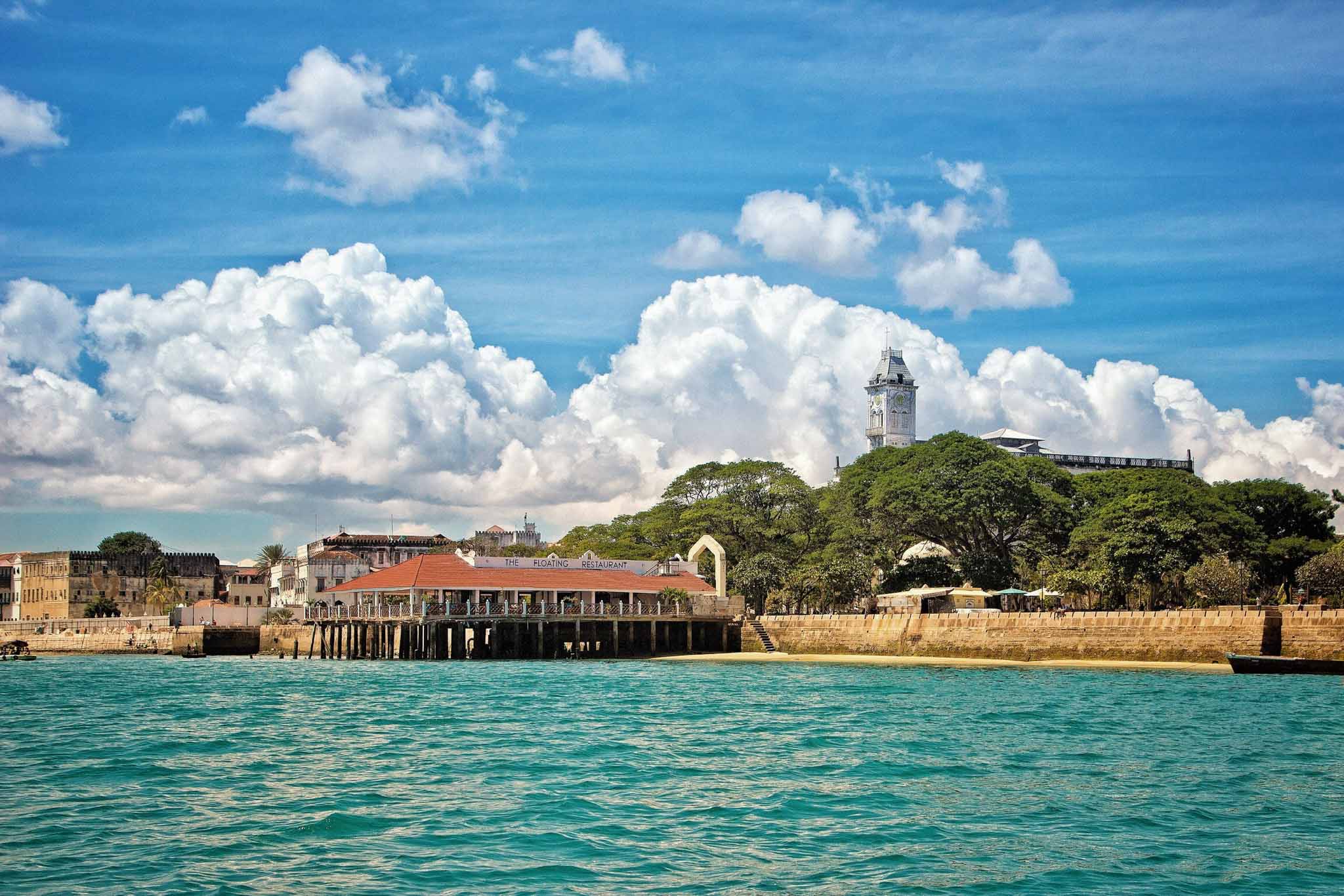
Stone Town is the old quarter of Zanzibar City, covering approximately 96 hectares on the western coast of Unguja Island. It has been continuously inhabited and continuously built upon for over a thousand years — the current streetscape is largely the product of the 18th and 19th centuries, when Omani Arab Sultans ruled Zanzibar as the commercial capital of the East African coast and invested in an extraordinary building programme of palaces, mosques, caravanserais, and merchant mansions. The layers beneath that period, however, are equally significant: Shirazi Persian settlers, Swahili coastal communities, and Portuguese colonial administrators all left traces in the built environment and cultural life of the town that predate the Omani period by centuries. Walking through Stone Town is, in a very real sense, walking through a compressed archive of East African coastal civilisation — each alleyway, each building facade, each carved door a document in a language that rewards careful reading.
The Architecture of Trade
The built environment of Stone Town is itself a historical document. The large merchant houses — many now converted to hotels or government offices — were built to an Arab courtyard plan: a blank, imposing external wall facing the street, concealing an inner courtyard that provided light, air, and privacy for the family within. This architectural logic was not merely aesthetic — it was a deeply practical response to the social and commercial realities of a wealthy trading society in which the display of riches on the street invited theft and unwanted attention, while the courtyard within could be lavishly decorated, planted with fragrant gardens, and fitted with carved wooden galleries that demonstrated the owner’s prosperity to invited guests rather than the general public. The contrast between the austere street-facing wall and the elaborate interior is one of the defining experiences of Stone Town — pushing through an unremarkable doorway to find yourself in a space of unexpected beauty and scale.
The street-facing element of these houses most visible to the visitor is the famous carved door, of which Stone Town contains over 500 examples. The doors of Stone Town’s merchant houses communicate the identity and pretensions of their owners through an elaborate symbolic vocabulary: brass spikes on the door frame indicated an Indian merchant borrowing a defensive tradition from their homeland; chain carvings around the frame represented the wealth derived from the slave trade; fish motifs indicated a family whose fortune came from the sea; intricate floral carvings demonstrated the refinement and cultural sophistication of an Arab family. The doors are not merely decorative — they are biographical statements, compressed family histories rendered in wood and brass by craftsmen whose skills were passed down through generations of specialist carvers. The size of the door itself was also communicative: the taller and wider the door, the greater the status of the household it served. Several of Stone Town’s grandest merchant houses feature doors over four metres tall, their carved surfaces representing months of skilled labour and an investment in self-presentation that was entirely deliberate and carefully calculated.
Beyond the private merchant houses, Stone Town’s public architecture reflects the ambitions of the Omani Sultanate at the height of its power. The House of Wonders — Beit el-Ajaib — built by Sultan Barghash in 1883, was the first building in East Africa to have electric lights and the first to have a lift, both imported from Europe as demonstrations of the Sultan’s modernity and wealth. Its wide verandas, clock tower, and imposing seafront position were statements of political authority addressed simultaneously to the Zanzibari population and to the European colonial powers whose ships anchored in the harbour below. The Old Fort, immediately adjacent, dates from the early 18th century and was built by Omani Arabs on the foundations of a Portuguese chapel — a literal overwriting of one colonial presence by another that is characteristic of Stone Town’s layered history. Today the Old Fort functions as a cultural centre hosting performances of traditional Taarab music and craft markets, its massive coral-rag walls enclosing a space that has served successively as military fortification, prison, railway terminus, and public amphitheatre.
The Slave Trade Memorial
No honest engagement with Zanzibar’s history is possible without confronting the slave trade that was the dark foundation of the island’s 19th-century prosperity. Zanzibar was the largest slave market in East Africa, processing an estimated 50,000 enslaved people per year at its peak in the 1860s. The trade was the engine of the entire regional economy: enslaved people were marched from the interior of the continent — from what are now Tanzania, Mozambique, Malawi, and the Democratic Republic of Congo — to the coast, loaded onto dhows, transported to Zanzibar, and sold in the open market on Creek Road to buyers from Arabia, Persia, India, and the Americas. The wealth generated by this trade funded the palaces and merchant houses of Stone Town, paid for the carved doors, supported the spice economy, and underpinned the commercial prosperity that made Zanzibar one of the most significant cities in the entire Indian Ocean world.
The former slave market on Creek Road is now a memorial and the site of the Anglican Cathedral, built by the Universities’ Mission to Central Africa in 1873 — the year Sultan Barghash finally abolished the slave trade under British pressure. The cathedral’s altar stands precisely on the spot of the whipping post where enslaved people were publicly beaten to demonstrate their physical condition to buyers. This deliberate placement was an act of theological and political statement by the missionaries who designed it — a consecration of a site of suffering into a site of worship that was intended to signal the permanent end of the trade and the redemption of the space it had occupied. The symbolism is powerful and contested in equal measure: for some visitors it represents an act of remembrance and transformation; for others, the construction of a Christian church on the site of an African tragedy carries its own uncomfortable colonial resonances.
In the basement, original holding cells — cramped, airless chambers designed to hold 75 people each — are preserved as a permanent testimony to what occurred here. The cells are small enough that the people held within them could not stand upright or lie flat; they were kept in total darkness, without sanitation, for days or weeks at a time before being brought to the market above. Visiting these cells is not comfortable. It is necessary. Outside the cathedral, a sculpture by Swedish artist Clara Sornas — five life-size figures in chains, set into a pit below ground level so that the viewer looks down at them — provides a more contemporary act of memorial that complements the historical preservation of the cells with an immediate emotional directness. Together, the cathedral, the cells, and the sculpture constitute one of the most morally serious historical sites in East Africa — a place that demands time, attention, and a willingness to sit with difficult history rather than simply pass through it.
Stone Town, in the end, is a place that resists simplification. It is beautiful and it is troubling. It is a living city — home to tens of thousands of people going about their daily lives — and simultaneously a museum of one of the most complex and consequential chapters in the history of the Indian Ocean world. The UNESCO designation protects the stones. What the visitor brings to the experience of walking among them — the curiosity, the historical knowledge, the moral seriousness — is what transforms a walk through an old town into an encounter with history that actually means something.