Best Time to Visit Zanzibar Avoiding the Long Rains and Getting Calm Seas
Zanzibar’s climate is governed by the monsoon system of the Indian Ocean — a pattern of seasonal wind reversals that has shaped the island’s ecology, agriculture, and human history for millennia. Understanding this pattern is essential for planning a Zanzibar visit that delivers the combination of calm seas, clear skies,...
Zanzibar’s climate is governed by the monsoon system of the Indian Ocean — a pattern of seasonal wind reversals that has shaped the island’s ecology, agriculture, and human history for millennia. Understanding this pattern is essential for planning a Zanzibar visit that delivers the combination of calm seas, clear skies, and beach-suitable conditions that most visitors are seeking, while avoiding the long rains that can make a beach holiday genuinely uncomfortable. The monsoon is not simply a weather system — it is the organising principle around which the entire human geography of the Indian Ocean world was built. For thousands of years, the predictable reversal of winds between the northeast monsoon of the winter months and the southeast monsoon of the summer months made reliable long-distance ocean navigation possible without mechanical propulsion, creating the trade routes along which goods, people, religions, languages, and agricultural knowledge moved between Arabia, India, Southeast Asia, and East Africa. The dhow sailing calendar that once governed when merchants could travel between Oman and Zanzibar is the same calendar that today governs when the snorkelling visibility is best and when the kite surfers gather on the east coast beaches. Knowing which season you are travelling in, and what it means for the specific coast and activities you have in mind, is the single most important piece of practical knowledge for planning a successful Zanzibar trip.
The Four Seasons of the Zanzibar Year
The Zanzibar climate year divides into four recognisable seasons, each with its own character, its own advantages and disadvantages, and its own implications for the visitor experience. Understanding each in detail allows for travel planning that is genuinely matched to your priorities rather than based on the generalised advice — “go between June and October” — that most travel resources offer without further nuance.
The long rains, known locally as masika, run from mid-March through May and represent the period most emphatically to avoid for a beach-focused visit. The masika is not the gentle, photogenic tropical rain of travel fantasy — brief afternoon showers that clear to golden evening light. It is a sustained, heavy, sometimes relentless rainfall driven by the Inter-Tropical Convergence Zone as it moves northward across the Indian Ocean, bringing with it the accumulated moisture of months of ocean evaporation. Daily rainfall during the masika can be heavy and prolonged, lasting not hours but entire days, and the cumulative effect over weeks is a landscape that becomes waterlogged, a sea that becomes rough, murky, and unsuitable for swimming or snorkelling, and a humidity level that makes outdoor activity genuinely exhausting. Roads in rural areas can become impassable. Many smaller hotels and guesthouses close entirely during the masika, their owners returning to the mainland or undertaking the maintenance and renovation work that the rest of the year leaves no time for. Flights can be disrupted. The handful of visitors who do travel to Zanzibar during the masika are typically those with a specific reason — researchers, long-term travellers, people visiting family — rather than holidaymakers, and the island during this period has a quiet, inward quality that is interesting in its own way but is entirely different from the experience most visitors are seeking.
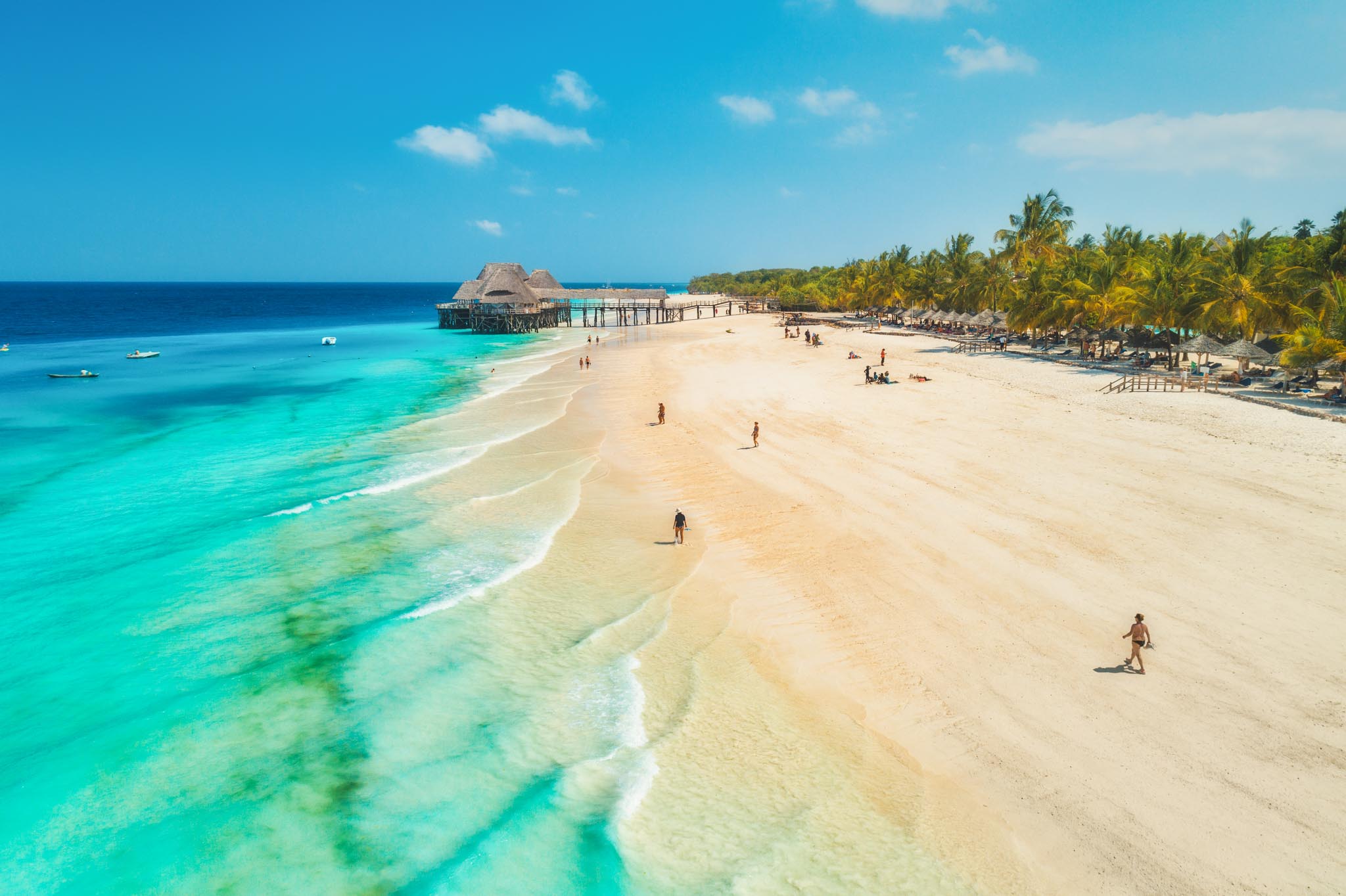
June through October is the peak dry season, the period when Zanzibar is most fully itself as a visitor destination. The southeast trade winds, known as the kusi, arrive in late May or early June with a reliable consistency that has governed Indian Ocean navigation for centuries, and their effect on the island’s climate is immediate and transformative. The heavy clouds of the masika clear, replaced by the high, clear skies of the dry season. Temperatures moderate to the low-to-mid 20s Celsius — warm enough to swim and sunbathe comfortably, cool enough to walk and explore without the draining heat of the equatorial summer. The sea, cleared of the sediment stirred up by the rains, achieves the extraordinary turquoise clarity that defines the Zanzibar beach experience in the imagination of travellers worldwide. This is when the snorkelling and diving visibility is finest, often exceeding 20 metres in the best conditions around the coral reefs of Mnemba Atoll and the offshore islands. The kite-surfing conditions on the east coast are most consistent during this period, with the kusi delivering the steady 15–25 knot winds that draw kite surfers from across the world to the beaches of Paje and Jambiani. For the overwhelming majority of visitors — those seeking beach, sea, water sports, and reliable sunshine — June through October is the optimal window, and it is correspondingly the busiest and most expensive period to travel. Booking accommodation well in advance, particularly for the most sought-after properties in Nungwi, Kendwa, and Paje, is essential during July and August.
November brings the short rains, the vuli — a notably gentler weather transition than the masika that precedes the dry season. The vuli typically consists of a few weeks of afternoon and evening showers, often arriving with dramatic cloud formations and vivid lightning over the ocean, followed by clear mornings that are perfectly suitable for beach and water activities. The short rains rarely significantly disrupt outdoor activities and do not usually deter experienced beach visitors who understand the pattern — a morning of snorkelling followed by an afternoon shower is a perfectly workable day in November Zanzibar, and the combination of lower prices, reduced crowds, and generally pleasant morning conditions makes November an underrated month for the informed traveller. The landscape during and after the vuli is also notably lush and green, the vegetation refreshed by the rains in a way that the dry season’s dusty browns do not deliver.
December through February is warm, clear, and pleasant on the north and east coasts, with the northeast trade winds — the kaskazi — producing settled weather and warm sea temperatures ideal for swimming and snorkelling. This is the second peak tourist season in Zanzibar, driven primarily by European visitors escaping the northern hemisphere winter and the Christmas and New Year holiday period. Sea temperatures during the kaskazi season are at their warmest, typically 27–29 degrees Celsius — comfortable for extended time in the water without a wetsuit, and ideal for the marine encounters that define the Zanzibar underwater experience. Whale sharks, which visit the waters around Zanzibar seasonally, are most frequently sighted between October and March, making the kaskazi season one of the best times to combine beach relaxation with the extraordinary experience of snorkelling alongside the world’s largest fish.
North Coast vs East Coast Seasonality
One of the most important and least widely understood nuances within the Zanzibar seasonal picture is the significant difference between the north coast and the east coast in terms of their exposure profiles, tidal characteristics, and optimal visiting periods. These are not interchangeable beach destinations offering the same experience at different compass points — they are genuinely distinct environments with different weather exposures, different sea conditions, different activities on offer, and different visitor demographics, and choosing between them on the basis of when you are travelling is one of the most consequential decisions in planning a Zanzibar holiday.
The north coast — anchored by the villages and resort clusters of Nungwi at the island’s northern tip and Kendwa a few kilometres to the south — faces northwest and is largely sheltered from both the southeast and northeast monsoons by the geography of the island itself. This sheltered exposure makes the north coast swimmable virtually year-round, a characteristic that no other part of Zanzibar can reliably claim. The tidal variation that makes the east coast temporarily inaccessible for swimming at low tide — when the sea can retreat hundreds of metres across flat sand, leaving shallow warm pools but no swimmable depth — is also significantly less pronounced on the north coast, where deeper water closer to shore means that swimming is possible at most states of the tide. For visitors whose primary objective is guaranteed swimming and beach relaxation regardless of season, the north coast is the most reliably suitable destination. Nungwi and Kendwa are also the most developed parts of the island in terms of tourist infrastructure, with a wide range of accommodation from budget backpacker guesthouses to luxury boutique hotels, a well-established restaurant and bar scene, and easy access to snorkelling trips to the nearby reefs and sandbanks.
The east coast — the string of villages and beach settlements running from Matemwe in the north through Kiwengwa, Paje, and Jambiani in the south — is a fundamentally different proposition. Its exposure to the open Indian Ocean and to the full force of the southeast monsoon gives it the consistent wind conditions that make it one of the finest kite-surfing destinations in the world, with the beaches of Paje in particular hosting a well-developed kite-surfing infrastructure of schools, rental operations, and accommodation geared to the sport’s practitioners. The same exposure, however, means that the east coast experiences rougher seas and more pronounced tidal variation at times outside the kusi season. At low tide during the wrong season, the east coast reveals a vast, shallow lagoon — visually stunning in its way, a mirror-flat expanse of pale turquoise water stretching to the distant reef line, but not swimmable in any conventional sense. Understanding the tidal cycle and the seasonal conditions of the east coast before arriving is essential to avoid disappointment; arriving at an east coast resort expecting a deep-water swimming beach and finding instead a knee-deep lagoon at low tide is a frequently reported source of visitor frustration that better pre-trip research would entirely prevent.
Practical Planning Summary
For first-time visitors who simply want beach, sea, and sun without specific activity requirements, June through October at either coast or December through February at the north coast are the two most reliable windows — the two periods when the combination of settled weather, clear seas, and comfortable temperatures most consistently delivers the Zanzibar beach experience that the island’s reputation promises. For kite surfers, June through October on the east coast is the non-negotiable answer. For divers and snorkellers prioritising underwater visibility, the June through October dry season offers the clearest conditions, though the warm-water kaskazi season from December through February is also excellent and adds the possibility of whale shark encounters. For budget-conscious travellers willing to accept some weather uncertainty, November and the very beginning of March — the shoulders of the two rain seasons — offer significantly lower prices, smaller crowds, and conditions that are often, though not reliably, perfectly pleasant. The masika from mid-March through May is the one period that only the most adventurous, flexible, or specifically motivated visitor should consider — not because Zanzibar loses its essential character during the rains, but because the beach experience that is the primary draw for most visitors simply cannot be relied upon during this period, and the investment of a long-haul journey deserves better odds than the masika reliably offers.