Serengeti Calving Season Photography Workshops in Ndutu
Every year, between late January and mid-March, the southern Serengeti becomes the location of one of the most extraordinary wildlife photography opportunities on Earth. The Serengeti calving season photography workshops in Ndutu are not a niche product for obsessive professionals — they are an experience increasingly sought out by serious...

Every year, between late January and mid-March, the southern Serengeti becomes the location of one of the most extraordinary wildlife photography opportunities on Earth. The Serengeti calving season photography workshops in Ndutu are not a niche product for obsessive professionals — they are an experience increasingly sought out by serious amateur photographers who understand that access to the right subject matter, in the right light, with the right guidance, is what separates a memorable image from an ordinary one.
Why Ndutu and Why Now
The Ndutu region sits at the junction of the Ngorongoro Conservation Area and the Serengeti National Park — a vast short-grass plain fed by seasonal lakes that fill with the November rains. When the wildebeest herds arrive from the north in January, they are drawn here by the nutritious short grass, which is itself the product of a complex ecological cycle linking volcanic soils, rainfall, and grazing pressure. The short grass is critical because wildebeest calves born on open, short-grass plains have a measurably better survival rate than those born in long grass — predators are more visible and calves can run sooner on the firm open ground.
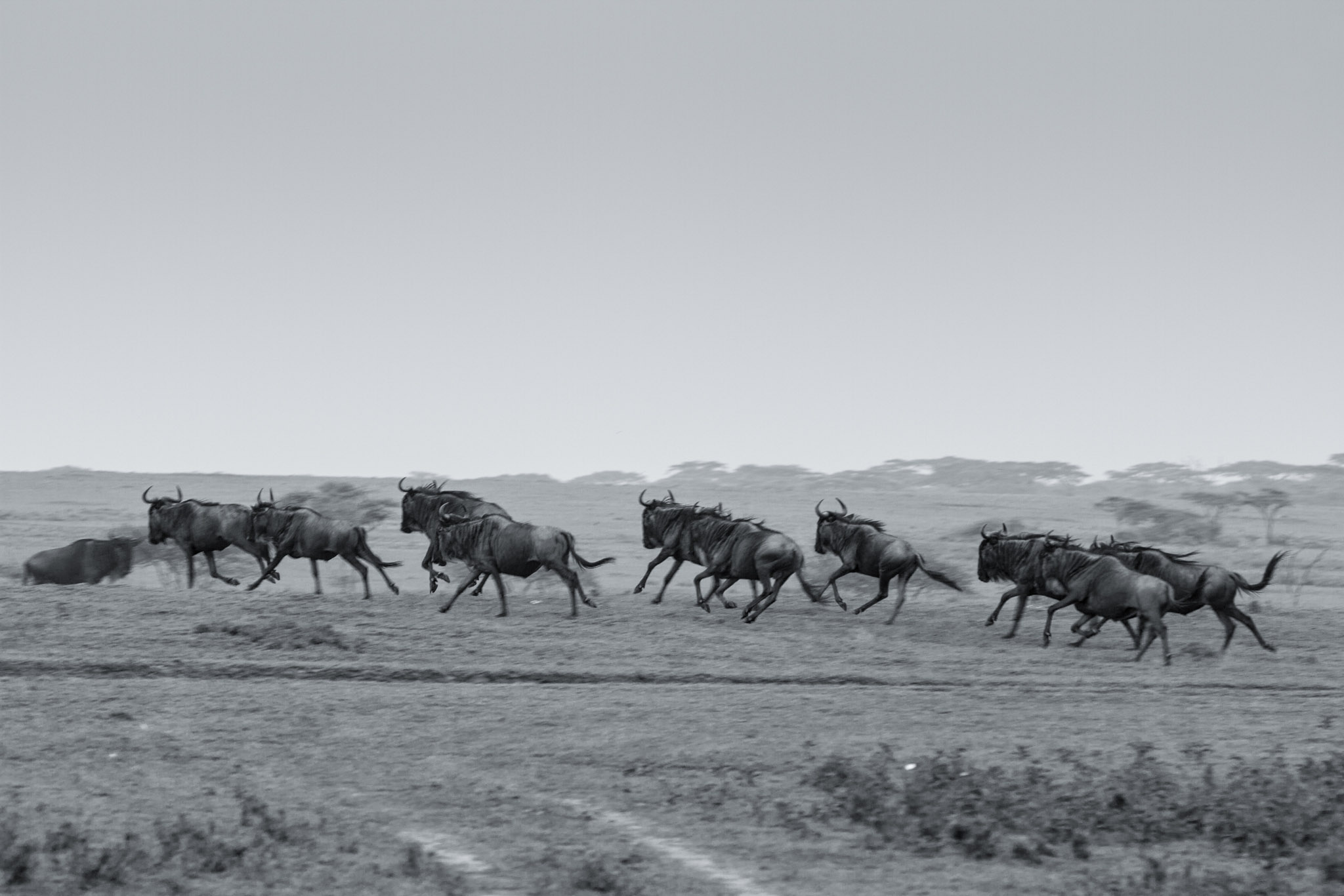
The result of this ecological logic is a concentration of perhaps 500,000 wildebeest on the Ndutu plains during the calving peak, with 8,000 calves born every day. And where 500,000 wildebeest and 8,000 daily calves exist, every predator in the southern Serengeti follows. Cheetahs that are normally spread across enormous home ranges compress onto the plains. Lion prides gorge themselves daily. Spotted hyenas form enormous clans that trail the herds. Serval cats, African wild cats, jackals — all drawn to the same extraordinary abundance.
What Makes the Photography Extraordinary
For photographers, the Ndutu calving season offers several simultaneous advantages that are rarely available together elsewhere. The subjects — newborn calves still wet from birth, mothers cleaning their young, predator hunts unfolding at high speed — are inherently dramatic and emotionally resonant. The flat, open plains mean clean, unobstructed sight lines with no bush or trees obscuring the action. The horizontal light of the Ndutu morning, falling across the plains at a low angle, produces the warm-toned, shadow-detailed images that wildlife photography editors consistently select for magazine covers. And the sheer density of subjects means that something significant happens within visual range almost continuously throughout the morning game drive.
The best Ndutu calving season photography workshops are structured around full-day game drives — leaving camp at dawn and returning only at dusk, with a packed lunch eaten in the vehicle when something compelling is happening nearby. A good workshop leader will position the vehicle for the light rather than for mere proximity, understanding that the angle of the sun relative to the subject is often more important than the distance. They will also have the experience to read animal behaviour and anticipate action before it happens — positioning the vehicle for a cheetah hunt that the cheetah is still planning, not reacting to it after it has already begun.
Choosing a Workshop
The best Serengeti calving season photography workshops in Ndutu are small — typically 4 to 6 participants sharing a customised vehicle with a roof hatch and bean-bag supports for telephoto lenses. They run for a minimum of 5 nights, typically from a mobile camp or a Ndutu-area lodge. The quality of the workshop leader — their photographic knowledge, their wildlife experience, and their ability to communicate both simultaneously in the field — varies enormously. Look for leaders with published wildlife photography portfolios, verifiable field experience in the Ndutu region specifically, and small group sizes. Ndutu Safari Lodge and a handful of mobile camps positioned within the Ndutu woodland provide the best base, combining proximity to the calving grounds with reasonable comfort. This is a formative experience for any serious wildlife photographer, and it rewards investment in both preparation and quality.