Habituated Chimpanzee Community Mahale Mountains M-Group Social Behaviour Research
The M-group community of chimpanzees at Mahale has been continuously observed by researchers from Kyoto University since 1965 — a period of study now exceeding 60 years that constitutes one of the longest and most comprehensive primate research projects in history. The depth of knowledge accumulated about individual chimpanzee life...
The M-group community of chimpanzees at Mahale has been continuously observed by researchers from Kyoto University since 1965 — a period of study now exceeding 60 years that constitutes one of the longest and most comprehensive primate research projects in history. The depth of knowledge accumulated about individual chimpanzee life histories, social relationships, and behavioural patterns over this extended period is extraordinary, and it provides the context that makes a Mahale chimpanzee trek not merely a wildlife experience but an encounter with one of the world’s most significant ongoing scientific narratives.
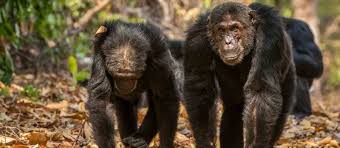
The M-group community currently numbers approximately 60 individuals — a community of sufficient size to exhibit the full range of chimpanzee social complexity. At the centre of this complexity is the alpha male hierarchy: the dominant male holds his position through a combination of physical strength, coalition-building with other males, and the ability to maintain alliances that deter challenges to his status. The alpha male’s position is not permanent — it is contested continuously, and the political manoeuvrings by which alliances are formed, tested, and dissolved constitute a social drama of genuine complexity that has been documented in extraordinary detail by the Mahale research team.
Female chimpanzees at Mahale are individually known to researchers, and their life histories — the number of offspring they have raised successfully, the social relationships they maintain with other females, the ways in which high-ranking females support or obstruct the social mobility of their sons — have been tracked over multiple generations. Some of the current community members are the grandchildren of individuals who were first studied in the 1960s, and the ability to track kinship networks, behavioural inheritance, and cultural transmission across three generations of wild chimpanzees makes Mahale’s research dataset one of the most scientifically valuable in primatology.
For the visiting trekker, this research history means that the guide accompanying you knows every adult individual by name and can provide a running commentary of social relationships, recent events, and individual histories that transforms the encounter from wildlife observation into something closer to meeting a community of known individuals in their home. The alpha male has a name. The elderly female grooming her adult son has a history. The juvenile who approaches your group with apparent curiosity has a mother who has been watched since her own birth, and that mother’s mother is in the photographs taken by Japanese researchers in 1975. This is the depth that 60 years of continuous study delivers — and it is available to every Mahale visitor in the quality of interpretation that the park’s experienced guides provide.