Wild Chimpanzee Trekking Mahale Mountains National Park Tanzania Western
There is a moment, somewhere in the forest above the shore of Lake Tanganyika, that every visitor to Mahale describes slightly differently but with the same essential core: the moment when a wild chimpanzee turns and looks directly at you. Not at the camera, not at the guide — at...
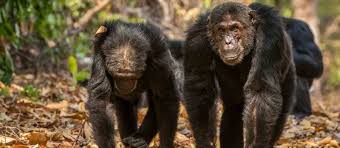
There is a moment, somewhere in the forest above the shore of Lake Tanganyika, that every visitor to Mahale describes slightly differently but with the same essential core: the moment when a wild chimpanzee turns and looks directly at you. Not at the camera, not at the guide — at you, specifically, with an expression of such clear intelligence and such specific curiosity that the conceptual distance between your species and its closest relative collapses entirely. You are not watching an animal. You are being assessed by a relative.
Wild chimpanzee trekking at Mahale Mountains National Park is, in the considered opinion of most primatologists and wildlife enthusiasts who have experienced it, the most profound wildlife encounter available anywhere in Africa. This is not hyperbole. It is a claim grounded in the specific quality of the experience: the combination of habituation depth (decades of continuous research have produced chimpanzees entirely comfortable with close human presence), forest environment (the trek through the Mahale forest to find the chimps is itself beautiful and challenging), and the sheer intensity of spending an hour at close range with animals whose genome is 98.7% identical to yours.
The Trek
The chimpanzee trek at Mahale begins at dawn from the camp or lodge on the lake shore. Rangers who have monitored the M-group community daily for years make contact with the group via vocalisations and tracking, and the team moves into the forest to intercept the chimps as they begin their morning activity. The terrain is steep in places — the Mahale Mountains rise sharply from the lake shore to peaks above 2,400 metres — and the forest floor is the root-complex, rock-studded, uneven ground of a mature tropical forest rather than a maintained trail. Walking poles and good footwear are recommended. The physical effort of the trek makes the arrival in the presence of the chimpanzees a more emotionally significant moment — it has been earned rather than merely paid for.
Once the group is located, the rules are strict: maintain a minimum distance of 8 metres from any individual, no flash photography, no coughing or sneezing directly toward the chimps (they are vulnerable to human respiratory diseases), no eating or drinking in the presence of the group. The one-hour time limit with the chimpanzees begins when the first member of the group is located, and it is enforced without exception. In practice, this hour passes with an intensity of concentration that makes it feel both very short and surprisingly complete — you emerge from the forest aware that something significant has happened, even if you are not yet entirely sure how to describe it.